
Understanding the Different Types of Business Delivery Destinations
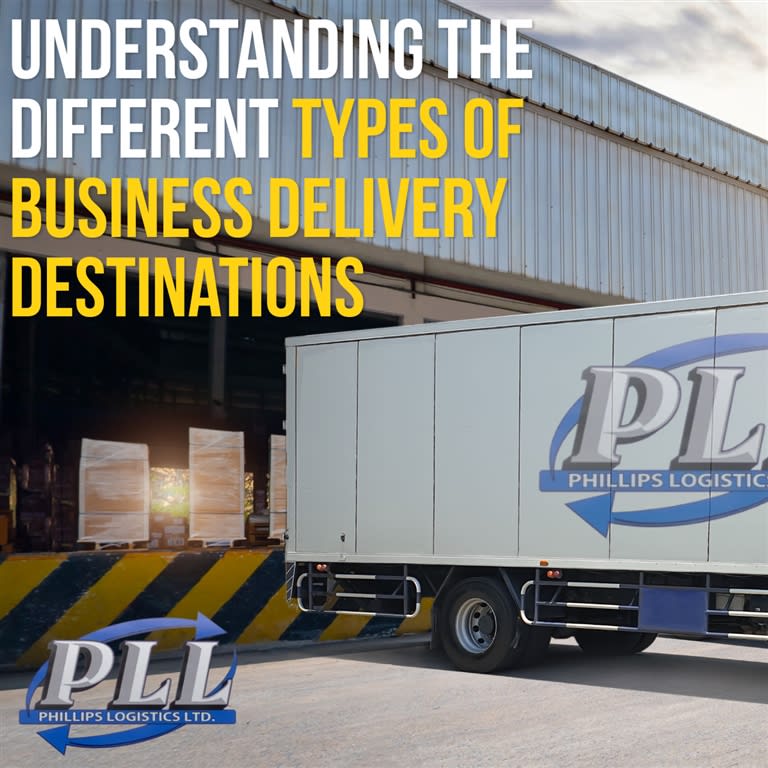

Not every business delivery ends at the same type of location.
Some goods are transported to warehouses, others are delivered to retail premises, while certain products need to reach customers directly at their homes.
Although the purpose of each delivery is to get goods to the correct destination, the arrangements involved can vary depending on where those goods are going.
For businesses arranging regular transport, understanding these differences can help them choose delivery services that suit their operations and their customers.
Delivering Goods to Warehouses
Warehouses are a common destination for business deliveries, particularly for companies that hold stock before distributing it elsewhere.
Goods may be transported to a warehouse for storage, stock replenishment or onward distribution.
These deliveries often involve palletised goods or larger quantities of products, although the size of consignments can vary.
When arranging warehouse deliveries, businesses should consider how the goods fit into their wider stock management and distribution arrangements.
For example, some products may be stored for an extended period, while others may need to be distributed to another location relatively quickly.
Understanding the purpose of the delivery can help businesses organise transport around their stock requirements.
Delivering Directly to Retail Premises
Retail deliveries can involve different considerations from those made to warehouses.
Shops often receive goods to replenish stock, introduce new products or prepare for upcoming trading periods.
For retailers, receiving goods at an appropriate time can be important, particularly when staff need to manage deliveries alongside their normal responsibilities.
The frequency of deliveries may also vary depending on the business.
Some retailers may require regular stock replenishment, while others may arrange deliveries when particular products are needed.
Businesses supplying retail premises should consider these requirements when organising transport.
Phillips Logistics provides trade and retail logistics services, supporting the movement of goods to different business destinations throughout Northern Ireland and Ireland.
Delivering Goods Directly to Customers' Homes
Not all deliveries are made to commercial premises.
For retailers selling furniture, household products and other large items, the final destination may be a customer's home.
Residential deliveries can involve additional coordination because customers may need to be available to receive their goods.
Unlike a commercial premises with established goods-receiving arrangements, a residential customer may need advance notice to prepare for a delivery.
Clear communication about delivery arrangements can therefore be particularly useful.
Phillips Logistics provides home delivery services, including two-person delivery options for suitable consignments.
The company also offers three-hour delivery windows and courtesy calls on request, helping customers plan around the arrival of their goods.
When Goods Need to Reach Multiple Destinations
Some businesses need to deliver goods to several different types of locations.
For example, a supplier may transport stock to a warehouse, replenish products at retail premises and arrange deliveries directly to customers.
These requirements may involve different consignment sizes, delivery frequencies and transport arrangements.
A business supplying several destinations should consider whether its logistics provider offers services suitable for the range of deliveries it needs to make.
Phillips Logistics transports consignments ranging from small parcels and single pallets to part loads and full loads.
This range of services allows businesses to discuss transport arrangements for different types of goods and destinations.
Choosing Delivery Arrangements That Suit Your Business
The most appropriate delivery service depends on more than the distance between collection and destination.
Businesses should also consider who will be receiving the goods, how frequently deliveries are required and whether the destination is commercial or residential.
For example, a retailer arranging deliveries directly to customers may have different priorities from a supplier transporting stock between business premises.
Understanding these differences can help businesses identify the services that best suit their requirements.
It is also useful to review delivery arrangements when a business begins supplying new types of customers or locations.
Supporting Deliveries to Different Destinations
Warehouses, retail premises and residential addresses each have their own delivery considerations.
Understanding the destination and the needs of the recipient is an important part of arranging suitable transport.
Whether goods are being moved between businesses, delivered to a retail location or transported directly to a customer's home, having access to appropriate logistics services can help businesses manage their delivery requirements.
At Phillips Logistics, we provide flexible transport solutions for trade, retail and home deliveries throughout Northern Ireland and Ireland.
Need to arrange deliveries to different locations? Contact Phillips Logistics to discuss your transport requirements:
Call us: 02887 726414


